iOS NoEscape challenge by Mobile Hacking Lab
My hands-on solution for bypassing the jailbreak detection in the NoEscape challenge by Mobile Hacking Lab.

No Escape
The challenge centers around a fictitious app called No Escape, designed with robust jailbreak detection mechanisms. Your mission is to bypass these mechanisms and gain full access to the app's functionalities using Frida.
1. Mach-O Analysis
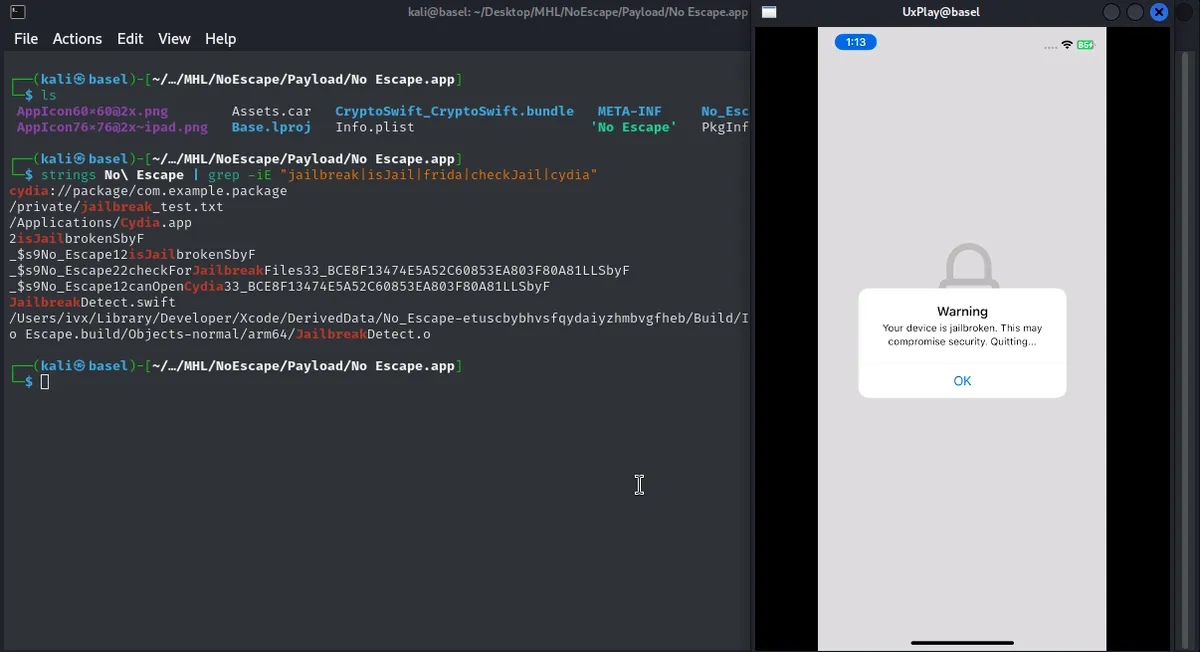
Starting with basic static analysis, a quick strings and grep on the Mach-O binary revealed exactly what we needed. The app (written in Swift) leaked hardcoded jailbreak paths like /Applications/Cydia.app. Even better, the Swift mangled strings exposed the exact detection functions: isJailbroken and checkForJailbreakFiles. We even found the developer's local build path pointing directly to JailbreakDetect.swift, giving us a clear map of what to target next.
2. Methods Analysis
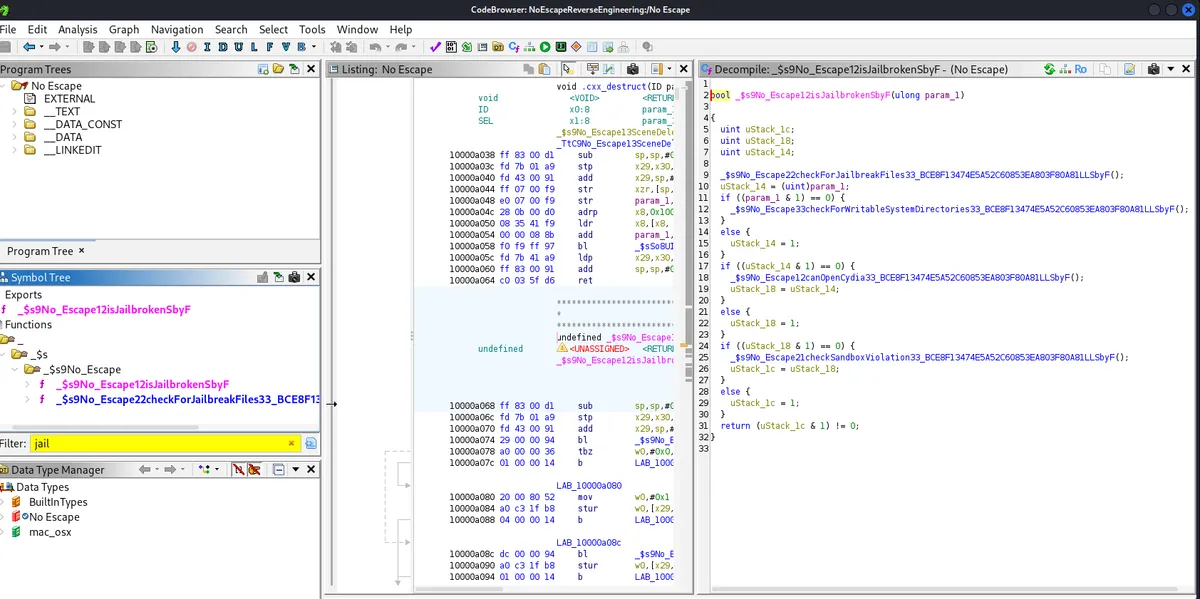
Next, I dropped the binary into Ghidra to see how the actual detection logic worked under the hood. The main entry point is the isJailbroken function, which essentially acts as a master switch. Looking at the decompilation, it chains together four distinct checks: checkForJailbreakFiles, checkForWritableSystemDirectories, canOpenCydia, and checkSandboxViolation.
The logic here is a classic cascade (basically a series of logical ORs). It runs the first check; if it comes back clean (0), it moves to the next. If any of these functions trigger and return 1 (True), the app stops checking and instantly flags the device as compromised.
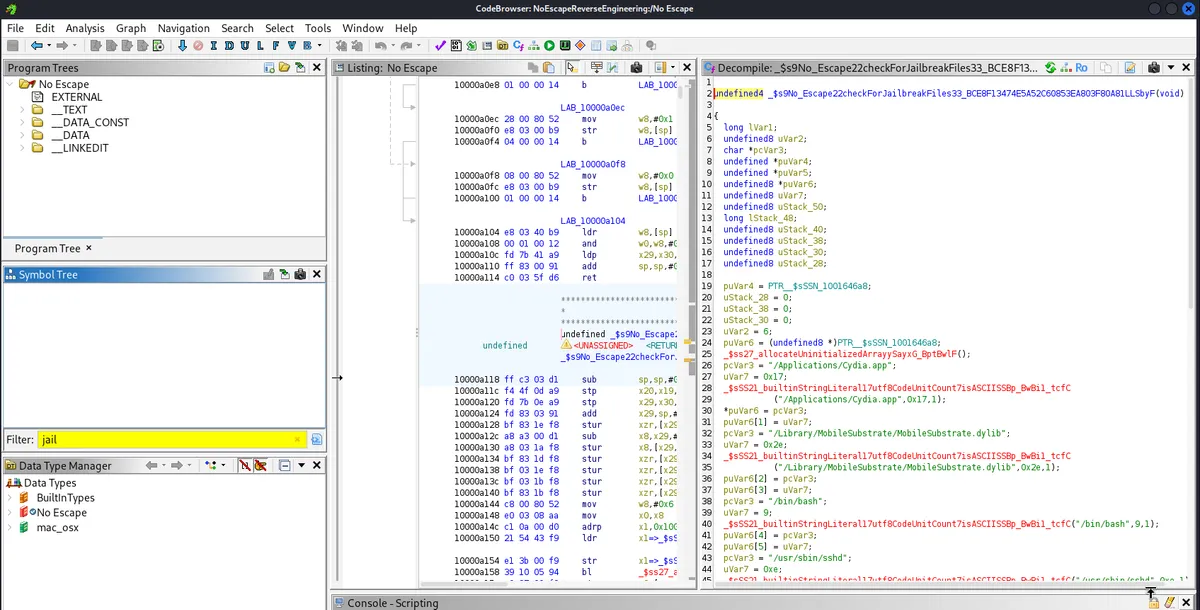
To understand the specifics, I dug into the first function in the chain: checkForJailbreakFiles. The logic is simple. The app builds an array of classic jailbreak indicators (like Cydia, MobileSubstrate, and OpenSSH) and loops through them. For each item, it bridges to Objective-C to call [NSFileManager fileExistsAtPath:]. If it spots even one of these blacklisted files on the filesystem, it trips the wire and returns True.
3. Bypassing Technique
Now for the fun part: actually beating the check. When dealing with this kind of local, client-side detection, we generally have three main avenues for a bypass:
1. Binary Patching: We can get our hands dirty, manually edit the Mach-O binary in a disassembler to hardcode the return value to 0, and then resign and run the modified app.
2. Dynamic Instrumentation (Frida): We can hook the function at runtime and forcefully rewrite the return value in memory before the app can act on it.
3. Third-Party Tweaks: We could take the easy way out and rely on existing system-wide jailbreak bypass tweaks to mask the filesystem entirely.
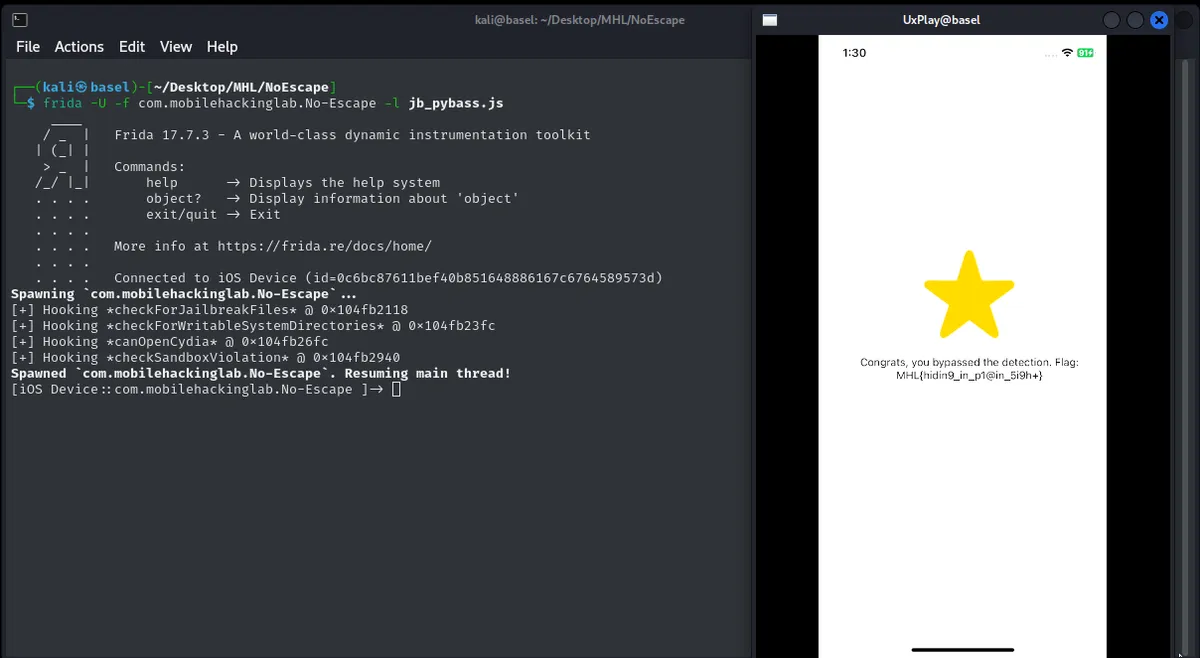
For this challenge, I decided to go with Frida. It is fast, iterative, and saves us the massive headache of repacking and resigning the binary every time we want to test something.
Here is the instrumentation script I used to intercept the method and spoof a clean device: JavaScript
const checks = [
    "*checkForJailbreakFiles*",
    "*checkForWritableSystemDirectories*",
    "*canOpenCydia*",
    "*checkSandboxViolation*"
];

checks.forEach(function(pattern) {

    const matches = DebugSymbol.findFunctionsMatching(pattern);

    matches.forEach(function(addr) {

        console.log("[+] Hooking " + pattern + " @ " + addr);

        Interceptor.attach(addr, {
            onLeave(retval) {
                retval.replace(ptr("0x0"));
            }
        });
    });
});